

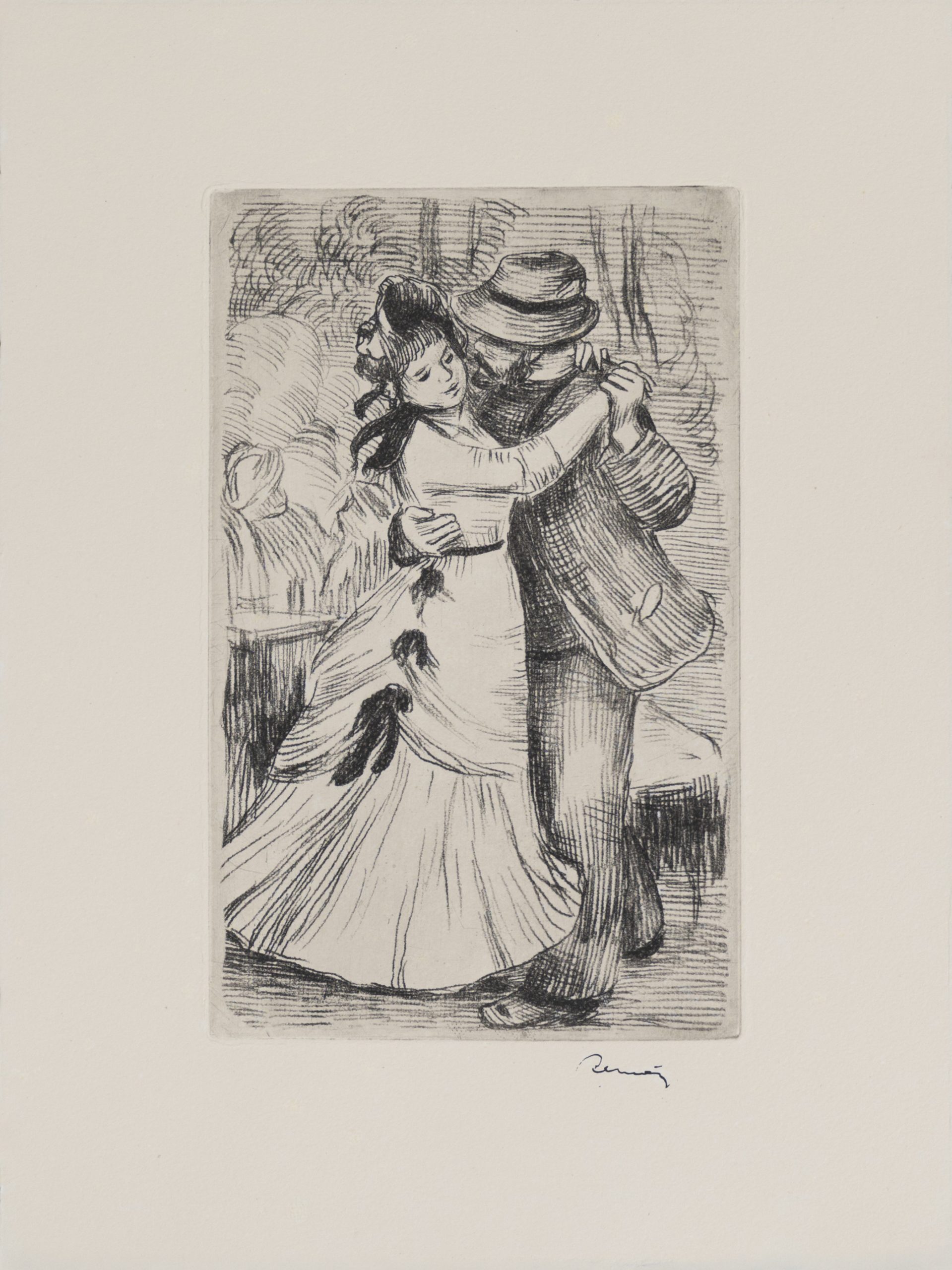
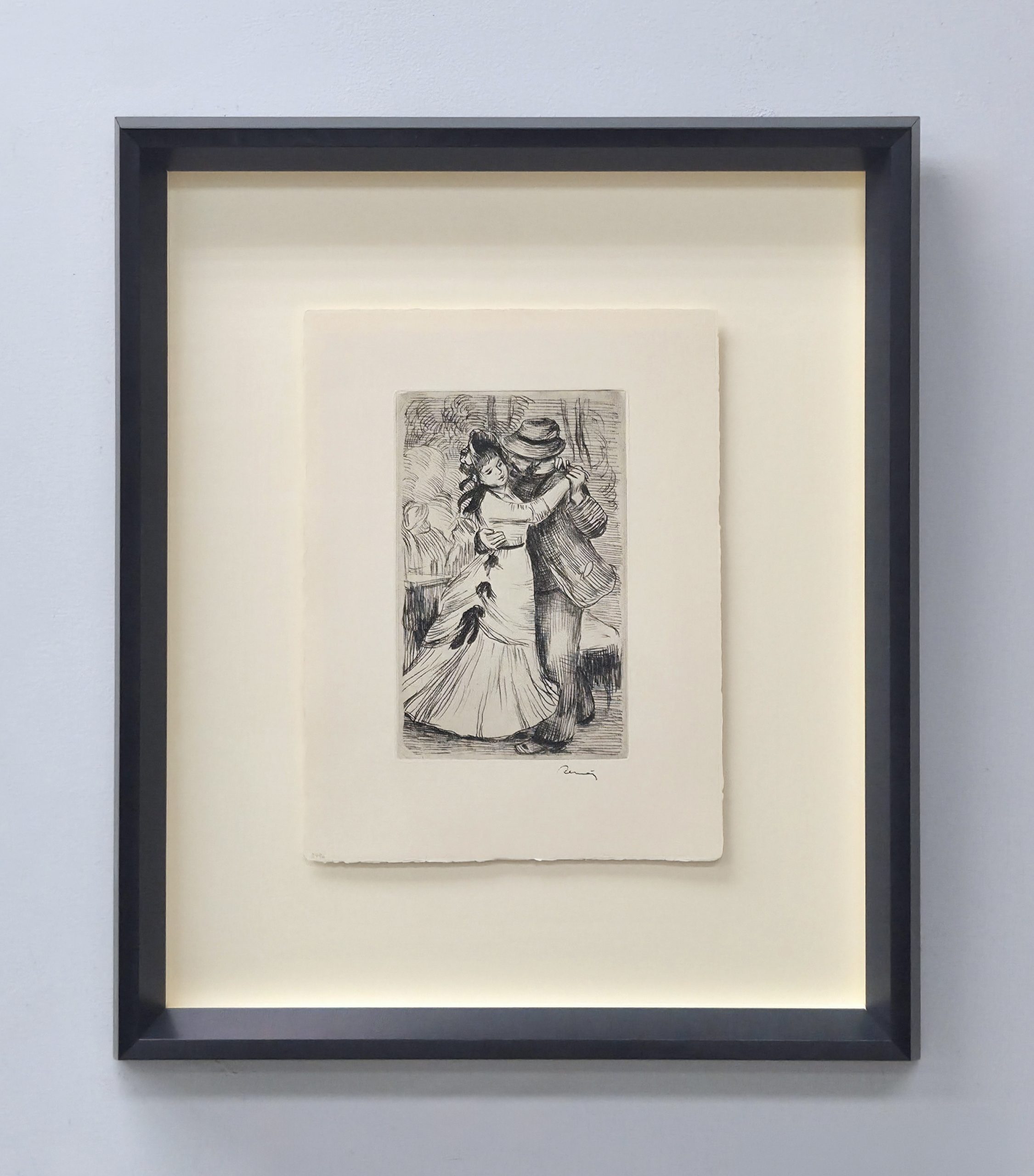



About the Artist
Famed for his sensual nudes and charming depictions of women, Auguste Renoir (1841–1919) was a founding member of the Impressionist movement. Though he ceased exhibiting with the group after 1877, he later developed a monumental, classically inspired style that influenced artists like Pablo Picasso.
Renoir began his career as a porcelain painter before studying at the Louvre and under Charles Gleyre, where he met Monet, Bazille, and Sisley. While painting in the forest of Fontainebleau, Renoir remained committed to figure painting, influenced early on by Gustave Courbet's Realism. His collaboration with Monet at La Grenouillère in 1869 catalyzed the Impressionist aesthetic, defined by loose brushwork and a brightened palette.
Renoir’s works from the 1870s captured modern life, with iconic pieces like Dance at the Moulin de la Galette. Portraiture became a significant focus, earning him wealthy patrons and financial stability, particularly after the success of Madame Charpentier and Her Children at the 1879 Salon.
By the 1880s, Renoir sought a more structured style, inspired by the old masters. Travels to Italy deepened his admiration for Raphael, leading to crisply defined, sculptural figures, as seen in Reclining Nude. In the 1890s, his work softened, reflecting the coloristic traditions of Titian and Rubens, with notable pieces like Two Young Girls at the Piano.
Despite declining health in his later years, Renoir continued painting, exploring sculpture, and developing a late style characterized by warm tones and Rubenesque nudes. His final works, celebrated by Picasso and Matisse, exemplify his enduring vision of beauty and Mediterranean classicism, securing his place as one of France’s greatest modern painters.
