Box Designs for Lefèvre-Utile: Madère Biscuits
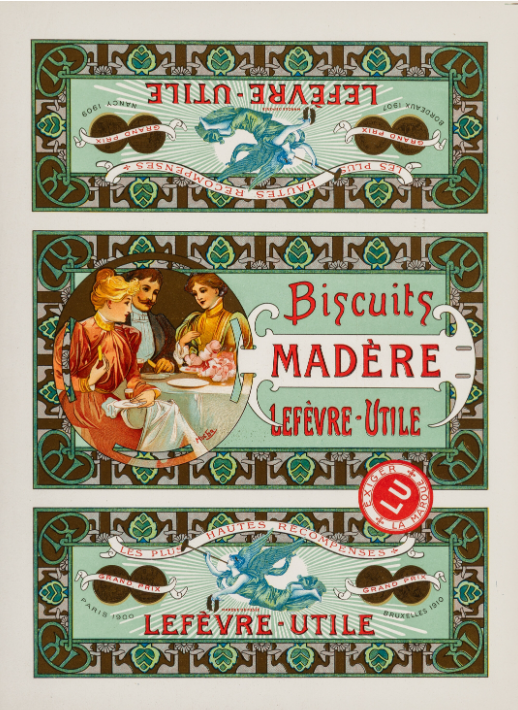
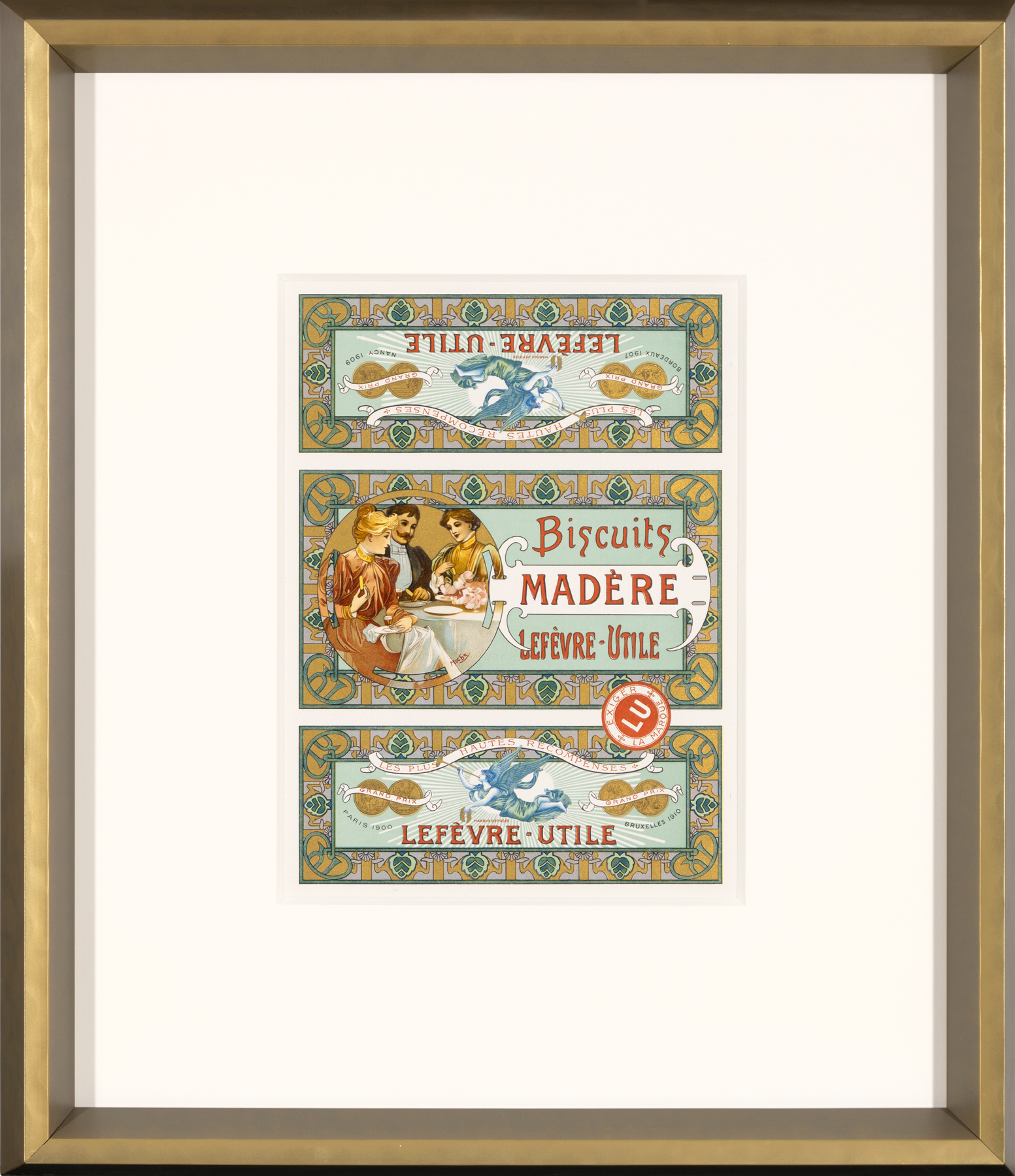
Box Designs for Lefèvre-Utile, Biscuits Champagne: Madère Biscuits, c.1900, Color Lithograph on Paper, 12.125" x 8.875"
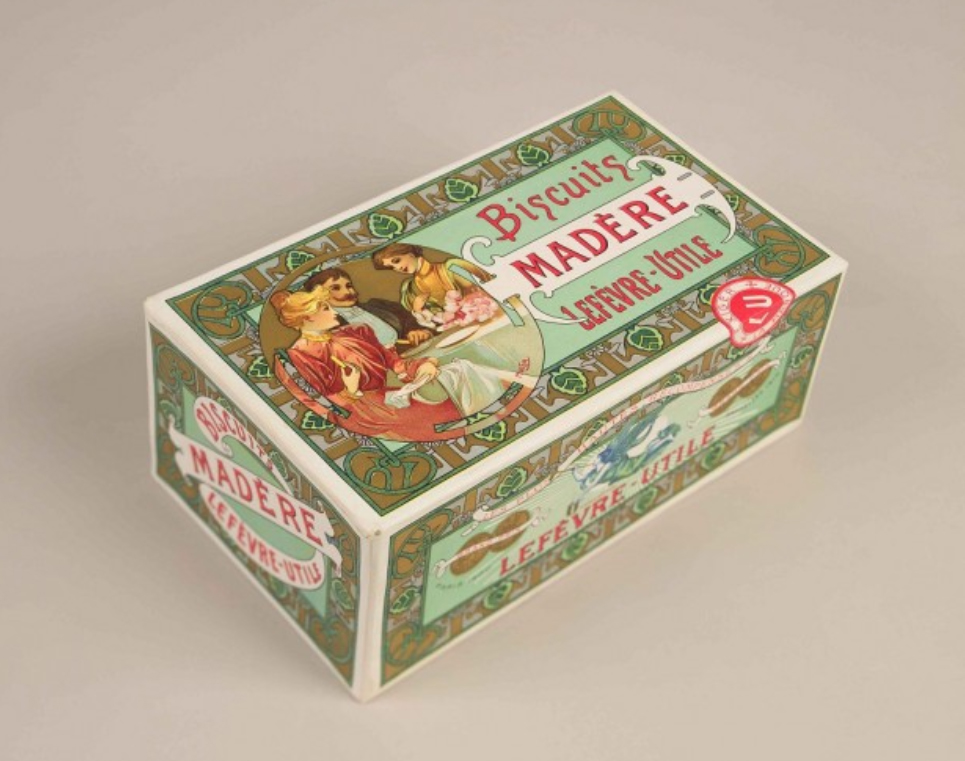
These elegant box designs reveal Alphonse Mucha’s remarkable ability to transform commercial packaging into a work of art. Designed for the company’s Biscuits Champagne and Gaufrettes Pralinées, the compositions combine graceful figures, refined typography, and richly ornamental Art Nouveau details.
Mucha was a regular artist for Lefèvre-Utile, the major French biscuit company founded in Nantes in 1846. He designed publicity posters and calendars for them and in 1896 was the first artist to utilise the company’s initials ‘LU’ as a decorative motif with his design for the advertising calendar for 1897. Around 1900 Mucha’s task was expanded to packaging design, which included labels, box tops and the decoration of biscuit tins.
For Mucha, packaging design meant the decoration of objects (products) by applying art to their forms in order to enhance their charm and character. Therefore, as he wrote later, he thought that art should serve as a language to the object to be decorated. This idea is demonstrated in the message carried by the biscuit boxes: the moment of happiness and comfort, as illustrated in the insets, as well as the quality of the products, which is enhanced by the box decorated with the borders emphasising solidity and dignity. Also Mucha produced a ‘brand’ with the use of a consistent font, logo and decorative formula, which linked the packaging with the publicity.
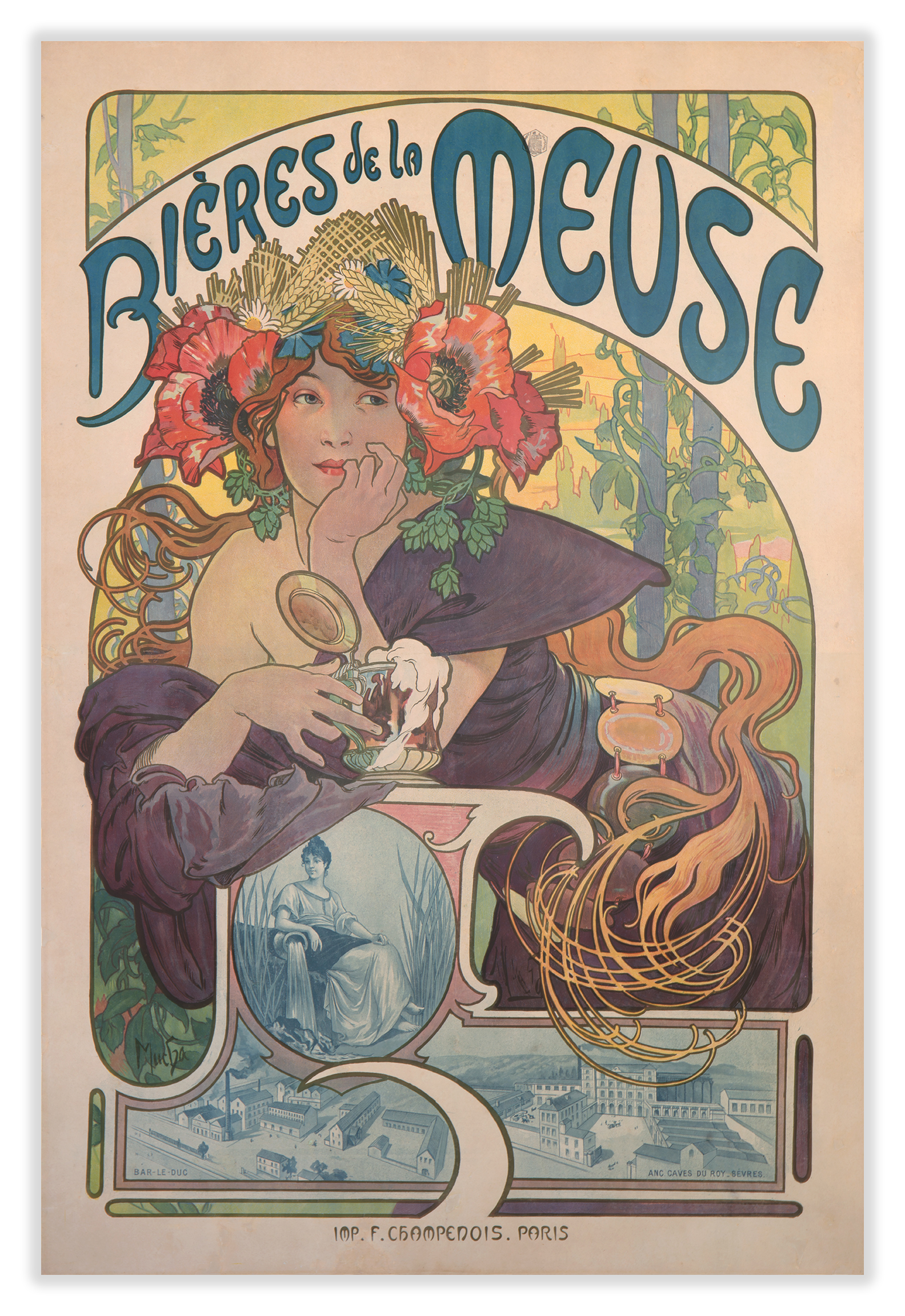
Mucha was famous for his commercial posters, which had a wide audience, but he also worked in a variety of other media, including furniture, jewelry, and theatrical sets. He mostly worked in Vienna and Paris but was also in Chicago, where he taught at the Art Institute, from 1904 to 1910. There, he introduced his interpretation of the "new art" to a United States audience. The densely patterned posters epitomize the Art Nouveau interest in natural forms, decoration, and a rejection of the anonymity of mechanical production.